Pitched and flat roofs
Roof Insulation In Amsterdam
Is your heating mostly keeping the seagulls warm?
Insulation from inside or outside, with a proper vapour control layer and no damp surprises a few winters later
Roof insulation in Amsterdam depends on the roof you've actually got. A loft under the tiles in Plan Zuid needs a different answer from the flat roof on a top-floor flat in the 19th-century ring around the centre. So we look first and quote second. If your home is more than two years old, the labour for fitting insulation is charged at 9% VAT rather than 21%, although the materials stay at 21%. Reach an Rd of 3.5 or better and you'll usually qualify for the ISDE, the national energy-saving grant. Two things we won't do: insulate without a vapour control layer, or insulate without asking how the place is ventilated.
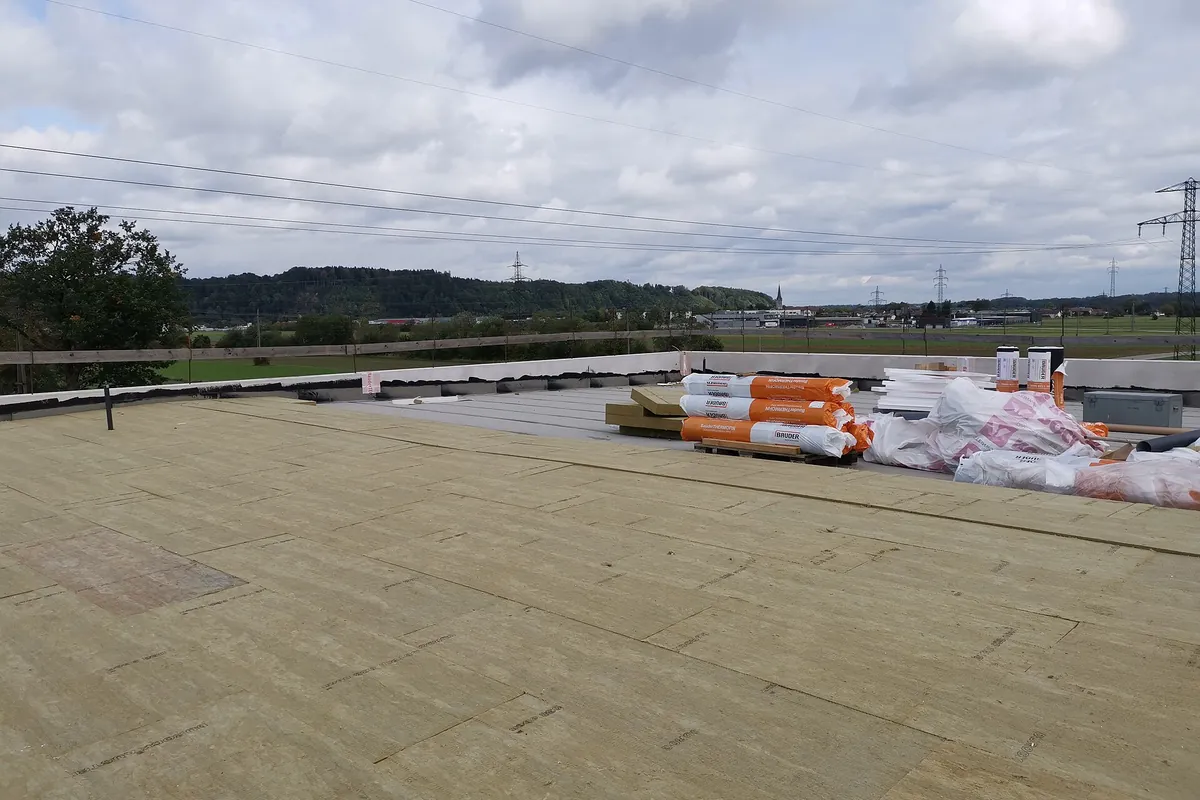
Book a roof insulation survey
- 1Tell us whether it's a pitched roof or a flat one
- 2We check the build-up, the space below and how it's ventilated
- 3You get a price with the VAT split out and the details for your grant
- Free roof inspection
- Before and after photos
- Priced per m² or per metre
- One person to deal with
- English & Nederlands
What you get out of it
What roof insulation in Amsterdam actually does for you
The KNMI (the Dutch Met Office) records almost 43 frost days a year at Schiphol. Heat rises, and in an uninsulated house some of what you're paying for leaves through the roof. Here's where you'll notice the change.
A loft you'll actually use
Under bare tiles it's freezing in January and unbearable in July. Insulate between or over the rafters and the loft becomes a room rather than a place for suitcases.
9% VAT on the insulation labour
For homes over two years old, the labour to fit insulation qualifies for the low rate. The materials are 21%. We show the two separately on the invoice, which is how it has to be done.
A grant paid per square metre
In 2026 the ISDE pays €16.25 per m², or €32.50 if you add a second measure. At least 20 m² has to be done, up to 200 m² counts, and the insulation must reach an Rd of 3.5 or more.
A bonus for biobased materials
Choose a biobased insulation material and the ISDE adds €5 per m². We'll tell you straight where it works well and where we'd steer you elsewhere.
Timber that stays dry
A vapour control layer on the warm side keeps damp indoor air out of the insulation. Leave it out and moisture condenses on the rafters or roof boards, and you won't find out until it's expensive.
A quieter roof in bad weather
Insulation also deadens sound. Schiphol averages more than fifteen days a year of force 7 winds or stronger, and on those days, especially under a flat roof, you'll hear the difference.
1
person to deal with, inspection to handover
m²
priced per square metre or metre of gutter, line by line
EN · NL
inspection and quote in your language
€0
for the roof inspection and photos
How we work
How we insulate a roof
Seven steps. The first is a look at your loft. The last is the paperwork for your grant, which we make as painless as paperwork gets.
- 01
Survey
We look at how the roof is built, the condition of the timber or covering and how you use the space below. In homes built before 1994 we keep an eye out for materials that might contain asbestos. Only a lab can confirm it.
- 02
Advice and quote
You get a recommendation for inside or outside insulation, with the material, the Rd value and a price. Labour and materials are listed separately, each with its own VAT rate.
- 03
Grant check
Before we start, we go through the ISDE conditions with you: built before 2019, at least 20 m², Rd 3.5 or better. You apply yourself, within 24 months of the work being done.
- 04
Preparation
Inside, the loft gets cleared and the floor covered. Outside, scaffolding goes up, and on a flat roof the old covering comes off if we're fitting a warm roof.
- 05
Vapour control layer
The vapour control layer goes on the warm side, with taped seams and sealed joints at walls, rafters and pipes. It's the step most often rushed. Not by us.
- 06
Insulate and close up
Inside, boards or rolls go between the purlins with a lining in front. Outside, insulation boards go onto the roof deck, followed by new tiles or a new membrane.
- 07
Ventilation and handover
An insulated roof makes the house more airtight. We check with you that the ventilation can cope, walk through the work together and hand over the product details and invoice for your ISDE application.
- →
Where to start?
Step one is a roof inspection. It costs nothing and you're not signing up to anything.
Book an inspection →
Before and after
Photos of the damage, photos of the result
Most people never see their own roof up close, which leaves you relying on whatever the roofer tells you. That's exactly where this trade gets its reputation. So we take photos: of the damage before we start, of the base once it's exposed and of the finished work. Ten years from now you'll still know what's under that membrane.
The quote names the materials, the number of square metres or metres, and how we'll finish the details: upstands, lead, pipes through the roof. If it leaks afterwards where we worked, and our workmanship is the reason, we come back and fix it. If the cause is somewhere else, next door or in a part we never touched, we'll tell you straight and show you the pictures.
Photos
of the damage before and of the result after
Itemised
materials, quantities and finishing all set out in the quote
Worth checking
What to check before you hire an insulation company
Ask for two numbers. The Rd value of the material, and the Rc value of the whole roof. The ISDE wants an Rd of at least 3.5. The Dutch building regulations, the Bbl, say that when roof insulation is renewed it must at least match what was there, with Rc 2.1 as the floor. A quote without those figures can't be compared with anything.
Ask where the vapour control layer goes and how the seams are sealed. Insulating a flat roof from below, a so-called cold roof, is fiddly work: if moisture gets behind the insulation, it has nowhere to go. That's why, on flat roofs, we nearly always recommend a warm roof, with the insulation on top of the deck and the new covering laid over it.
The ISDE only pays for work done by a company, so the invoice has to be right: insulation labour and materials listed separately, the square metres stated and the product named. If you live in a flat, the roof belongs to the VvE (owners' association). Amsterdam runs a scheme called Duurzame woningverbetering for VvEs in certain neighbourhoods in Zuidoost, worth up to €9,400 per privately owned home. Whether your area is included, and whether roof insulation counts, is something to check with the municipality first.
Side by side
Insulating from inside or outside
There's no single right answer. It comes down to the state of your roof and how much headroom you can spare. Prices are indicative, from Trustoo (2026), including materials and labour.
| Pitched roof, inside | Pitched roof, outside | Flat roof, warm roof | Flat roof, from below | |
|---|---|---|---|---|
| Where the insulation goes | Between and against the rafters | On the roof boards, under the tiles | On the deck, under a new covering | Against or above the ceiling |
| Guide price per m² | €20-50 | €40-100 | €45-100 | €25-40 |
| What you notice indoors | Loft out of action for a few days, a bit less headroom | Very little, the work is outside | Very little, the work is on the roof | Ceiling opened up or lowered, space lost |
| Roof covering | Stays put | Tiles off and back on, or new ones | New covering laid over the top | Stays put |
| Watch out for | Sealing the vapour layer around rafters | Needs scaffolding, roof sits slightly higher | Edges and outlets have to be raised too | High risk of condensation if the vapour layer is sloppy |
| Best for | Sound tiles, loft used as a room | Tiles due for replacement anyway | A covering that's reached the end of its life | Only when outside really isn't possible |
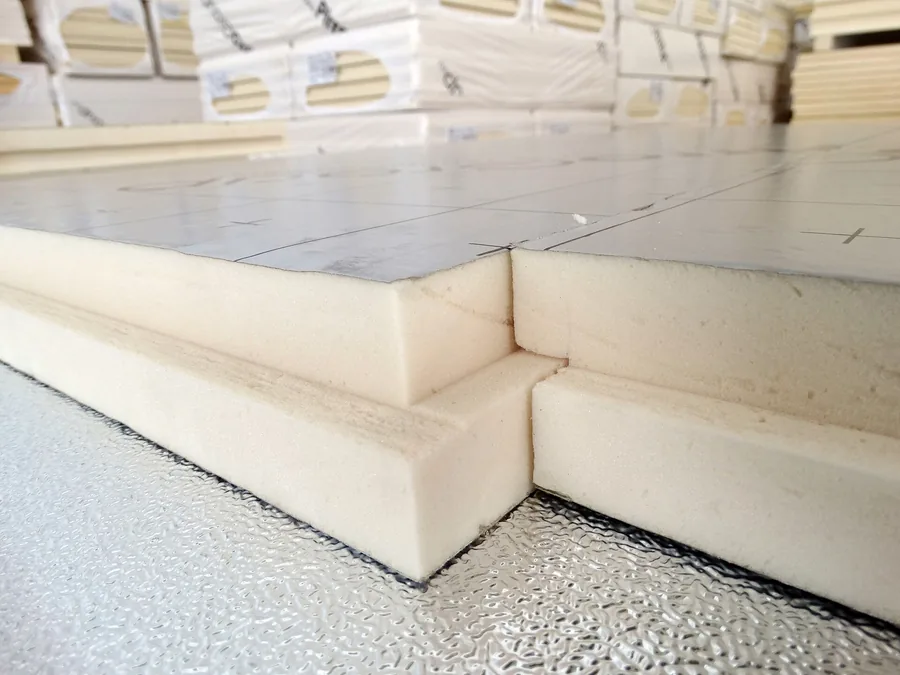
Insulation boards
What goes into a decent insulated roof
An insulated roof is a stack of layers, each with one job. On the inside, the vapour control layer, which holds back warm, damp air. Then the insulation, thick enough for the Rd you need. On the outside, a layer that keeps rain out but still lets moisture from inside escape. Put them in the wrong order and you've insulated a damp problem into your roof.
- Rd of at least 3.5 for the ISDE, with a lower bar for listed buildings
- Vapour control layer always on the warm side
- Flat roofs: a warm roof wherever possible, insulation on top
- Ventilation planned in from the start, not bolted on later
"When people get in touch about roof insulation, the loft often turns out to be half lived-in already: a bed, a desk, and an electric heater that runs all winter."
Rough prices
Roof insulation costs in Amsterdam
Price comparison site Trustoo puts a pitched roof at €20-50 per m² from inside and €40-100 from outside. For a flat roof it's €25-40 from below and €45-100 on top. The ISDE then comes off that: €16.25 per m², or €32.50 with a second measure. The labour is charged at 9% VAT if your home is more than two years old.
- €Inside or outside: outside costs more, but much less so if the tiles or covering need replacing anyway.
- €The Rd value: a thicker build-up costs more per m², but below 3.5 there's no ISDE.
- €The material: biobased is often pricier to buy, and earns an extra €5 per m² in grant.
- €Access: scaffolding on the pavement needs an objectvergunning (a permit to use public space) from the municipality, which takes time and money.
- €Ventilation: if an energy-efficient ventilation system goes in as well, RVO lists a one-off ISDE payment of €400 for 2026 when it's combined with insulation.
Indicative from
€20/m²
Indicative price for insulating a pitched roof from inside, per Trustoo (2026), materials and labour included. Trustoo doesn't say whether VAT is included. Your fixed price follows the survey.
Get your own priceQuestions
Roof insulation in Amsterdam: your questions
How much ISDE grant will I get for roof insulation in 2026?
€16.25 per m² for a single measure, and €32.50 per m² if a second measure follows within 24 months, such as cavity wall insulation or a heat pump. The minimum is 20 m² and the grant covers up to 200 m². The material needs an Rd of at least 3.5, the house must have been built before 2019, and a company has to do the work. Biobased materials add €5 per m². RVO, the government agency that runs it, has the current conditions.
Does the 9% VAT rate apply to the whole roof job?
No. The 9% only covers the labour of fitting insulation, in a home that's more than two years old. The insulation material itself is 21%, as is ordinary roofing work like new tiles or a new bitumen layer. That's why we split the invoice.
Do I need a permit to insulate my roof in Amsterdam?
Insulating from inside doesn't change how the house looks. Insulating from outside raises the roof slightly and sometimes means different tiles. If you live in a listed building or a protected cityscape such as the old centre or Plan Zuid, run the Vergunningcheck (permit check) on the government's Omgevingsloket site first. The gemeente Amsterdam decides, and its Commissie Ruimtelijke Kwaliteit advises on appearance. We'll work it out with you before anything gets ordered.
Why does the vapour control layer matter so much?
Indoor air is warm and damp. If it can get into the insulation, it cools against the cold outer side and the moisture settles on the timber. That can go on unnoticed for years, until there's mould or rot. A vapour control layer on the warm side stops it, but only if every seam and joint is properly sealed.
Will I need more ventilation after insulating?
Usually, yes. An insulated roof leaks less air, so the moisture from cooking, showers and breathing needs another way out. Sometimes a trickle vent is enough, sometimes mechanical ventilation makes more sense. For 2026 RVO lists a one-off ISDE payment of €400 for energy-efficient ventilation when it's combined with an insulation measure.
I own a flat with a VvE. Can I get the roof insulated myself?
The roof almost always belongs to the VvE (owners' association), so the decision sits with its general meeting. Insulating from outside fits best when the roof covering is already due in the long-term maintenance plan. Some VvEs in parts of Zuidoost can apply for the Duurzame woningverbetering scheme, worth up to €9,400 per privately owned home. Which neighbourhoods and measures qualify is listed on amsterdam.nl, so check that before the VvE votes.
Reviews
Customer reviews
No reviews here yet. Photos of every roof, though.
We're collecting reviews and will post them here as they come in, unedited and with permission. In the meantime, judge us on the work itself: every job comes with photos of the damage and of the finished result. Feel free to ask at the inspection what we've done near you.
Where we work
Roof insulation across Amsterdam
We insulate roofs in every part of the city, from top-floor flats in the 19th-century ring to the terraces and walk-up blocks of the Westelijke Tuinsteden in Nieuw-West. Outside the city we regularly work in Amstelveen, Diemen, Weesp and Almere.
- Amsterdam-Zuidoost
- Amstelveen
- Diemen
- Duivendrecht
- Ouderkerk a/d Amstel
- Abcoude
- Weesp
- Almere
- Badhoevedorp
- Hoofddorp
- Zaandam
- Purmerend
Let's see what's under those tiles
Send us a few photos of your loft or roof. We'll come round, measure up and tell you which insulation suits, what it costs and how much the grant covers. In English or Dutch, whichever you prefer.